How AI Is Redefining Business Decision-Making in 2025
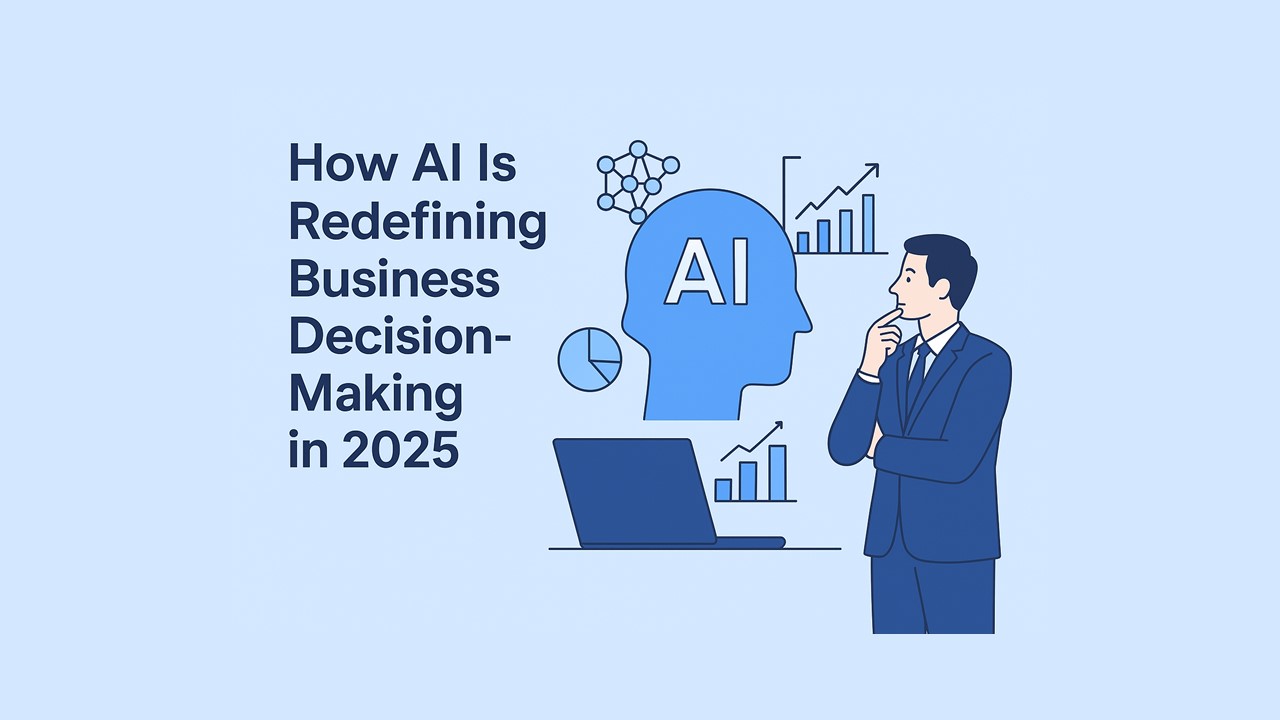
Artificial intelligence has moved from being a specialised technology to a mainstream driver of strategic advantage. In 2025, organisations across sectors are integrating AI into their decision-making frameworks to improve accuracy, speed and foresight. The result is a shift from reactive choices to proactive, insight-driven leadership.
Turning Complex Data into Actionable Intelligence
Businesses today sit on vast volumes of data from operations, customers, markets and digital interactions. Traditional analysis methods cannot keep pace with this scale. AI resolves this challenge by transforming raw and unstructured data into meaningful insights.
Modern AI systems answer not only “what happened?” but also “what is likely to happen next?” With predictive analytics, leaders can foresee demand shifts, identify emerging risks and respond to market changes before competitors. This real-time intelligence is helping organisations shorten decision cycles and make more confident choices.
Enhancing Strategic Planning and Forecasting
Strategic planning has become faster and more accurate with AI-driven scenario modelling. Instead of relying solely on historical data, organisations can now simulate thousands of possible outcomes within seconds. These simulations consider variables such as pricing decisions, resource allocation, market behaviour and economic shifts.
This approach reduces uncertainty during critical decisions such as market entry, product expansion or capital investment. With AI frameworks supporting long-term planning, businesses are better prepared for volatility and disruption.
Smarter Operational Decisions Across the Enterprise
AI improves routine and operational decision-making by providing continuous recommendations based on live data. In 2025, organisations use AI to:
- Optimise supply chains and predict stock requirements
- Automate customer service routing based on behaviour and intent
- Detect financial irregularities and reduce fraud
- Improve workforce scheduling using real-time demand patterns
- Anticipate equipment failures through predictive maintenance
Generative AI further accelerates this by presenting insights in natural language. Leaders can simply ask AI systems questions and receive clear, context-aware answers, eliminating reliance on complex reports.
Balancing Human Judgement with Machine Intelligence
AI augments decision-making rather than replacing the human element. While AI handles computation, pattern detection and repetitive analysis, humans provide strategic context, creativity and ethical judgement. Organisations that blend both strengths achieve decisions that are accurate, fair and aligned with long-term goals.
This synergy also reduces bias, enhances objectivity and frees leadership from time-consuming analytical work, allowing greater focus on innovation and value creation.
Proactive Risk Management
Risk management has transformed with AI-enabled early warning systems. These models track signals that indicate supply disruptions, regulatory changes, cyber threats or market fluctuations. Instead of reacting to crises, organisations can now anticipate them and put preventive measures in place. This strengthens governance and builds operational resilience.
AI is reshaping business decision-making in 2025 by providing clarity in complexity, speed in execution and precision in predictions. Organisations that harness AI effectively are becoming more adaptive, customer-focused and strategically informed. The future belongs to enterprises that pair advanced intelligence with human expertise to make smarter, bolder and more responsible decisions.